Summary
Bathrooms, especially showers, are a common place for slips and falls. Water, smooth surfaces, and tight space make simple movements, like turning or lifting a leg, more risky than people expect.
Universal design means building bathrooms that work well for real life, for all ages and abilities. It is not “medical” design. It is design that makes the space easier and safer to use without looking clinical.
Safety works best as a system, not one product. Grab bars give you a reliable place to steady yourself when stepping in, turning, sitting, or standing. Shower seating reduces fatigue and removes the need to balance on one leg while washing or shaving. A wall mounted folding shower seat can add support without taking up floor space when not in use. Good layout also matters, controls and storage should be easy to reach without twisting or stretching on wet surfaces.
You can make these upgrades without sacrificing style. Slip resistant shower flooring can look high end. A handheld shower head on a slide bar makes seated showering easier. Grab bars can match the room’s finishes and look intentional. Better lighting, including night lighting, helps prevent missteps.
Waiting often makes the outcome worse. A fall can lead to injury, but it can also lead to fear, loss of confidence, and reduced independence. Designing for safety early helps people stay comfortable and in control.
Main takeaway. A well designed bathroom supports independence and reduces fall risk, while still looking refined, because it is built for how people actually move and live.
Designing Bathrooms for Real Life, Safety, Independence, and Universal Design
Bathrooms look simple on paper. In real life, they combine water, smooth surfaces, tight turning space, and everyday movements, stepping over a threshold, reaching for a valve, washing a foot on one leg, often with very little margin for error.
A CDC analysis estimated about 234,094 nonfatal bathroom injuries, age 15 and older, treated in U.S. emergency departments in a single year, 2008. In that same report, the highest injury rates were observed in the tub and shower area, underscoring how quickly a normal shower can become a fall-prevention problem. (CDC, MMWR, Injuries in the Bathroom, 2011.)
Why showers create risk, even for “healthy” people
It is tempting to frame bathroom safety as something only older adults need. The reality is that the risk factors apply to everyone. Wet floors, limited traction, awkward reaches, and split-second balance corrections happen across all ages.
One underappreciated variable is fatigue. Balance and reaction time degrade when you are tired, especially during sustained standing tasks like showering. Research on walking-induced fatigue in healthy adults found measurable changes in sway and reaction time after fatigue, as well as an increase in overall fall risk measures in the oldest cohort studied. In plain terms, the more tired you are, the less your body “catches” small slips. (PMC, Effects of walking-induced fatigue on fall risk in healthy adults, 2016.)
Universal design supports people before they “need” it
Universal design is not about preparing for decline. It is about creating environments that support people of all ages, abilities, and life stages without calling attention to the support.
For an aging-in-place bathroom, the goal is to reduce risky moments and make the safest choice the easiest choice. The National Institute on Aging emphasizes that many falls happen at home and that practical changes can improve safety. In bathrooms specifically, they highlight steps such as installing grab bars near toilets and in and around the tub or shower, using nonskid surfaces, and improving lighting, including night lighting, to support safer movement. (National Institute on Aging, Preventing Falls at Home, Room by Room.)
Bathroom safety works best as a system, not a single add-on
A safer shower is rarely one product. It is a coordinated set of supports that reduce high risk transitions.
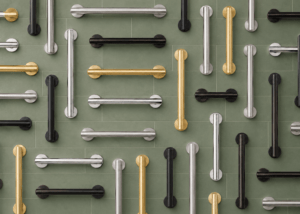
Grab bars provide stability where the body actually needs it, entering the shower, turning, lowering to sit, and standing back up. When placed intentionally, they reduce reliance on balance alone and help people move with confidence, rather than bracing on glass, tile edges, or fixtures not designed to support weight. The National Institute on Aging specifically calls out grab bars in and around the tub or shower as a key home fall-prevention step. (National Institute on Aging, Preventing Falls at Home, Room by Room.)
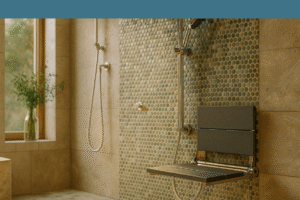
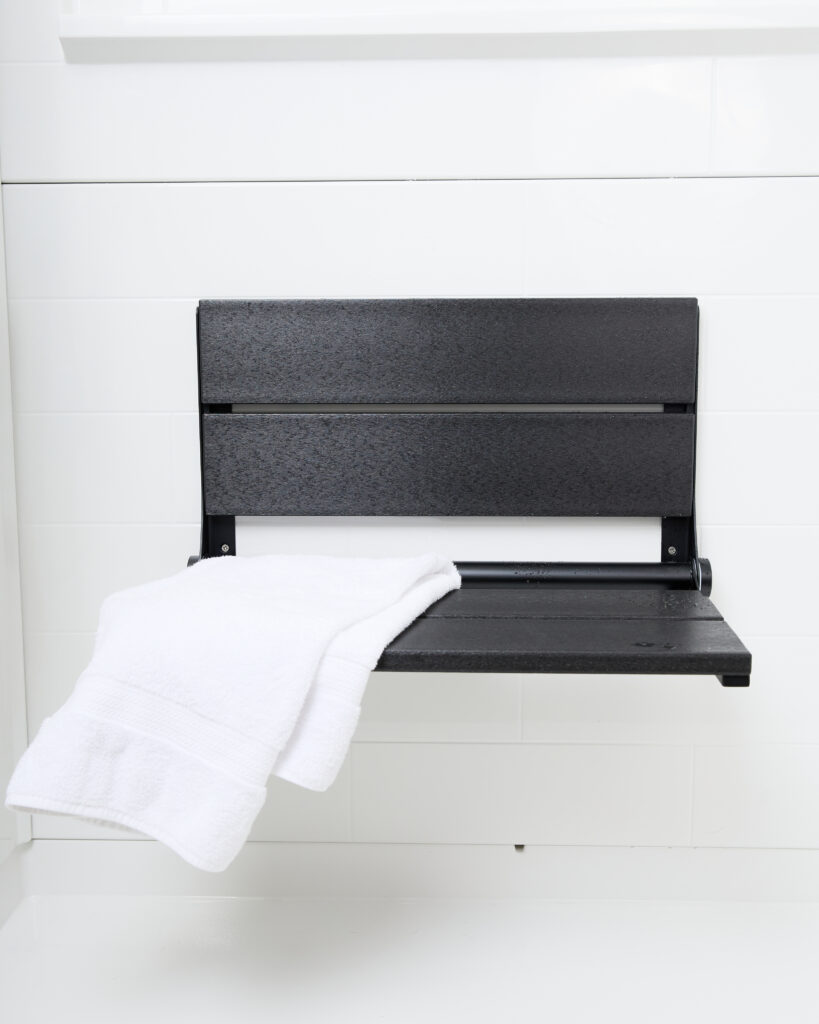
Shower seating reduces fatigue and reduces falls. Shower seating is not just for people who cannot stand. It is for anyone who does not want to balance on one foot while washing a leg, shaving, or rinsing, movements that combine forward reach and single-leg stance, which are common slip triggers. A wall-mounted folding shower seat adds another advantage; it creates a stable rest point without permanently consuming floor space, which matters in tighter showers.
Layout also matters. Even the right hardware fails if the layout forces awkward mechanics. Universal design bathrooms prioritize reach zones that do not require twisting, storage that does not require bending on wet surfaces, and shower controls that are easy to access from both standing and seated positions. These are the quiet details that make an accessible bathroom remodel feel natural, not specialized.
Design forward bathroom safety upgrades that still look high-end
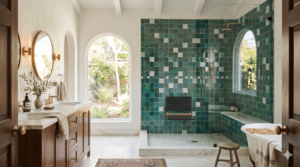
Bathroom safety upgrades do not have to look clinical. The best outcomes integrate accessibility into the architecture.
Slip-resistant shower floor options improve traction when wet and can still look refined. A handheld shower head on a slide bar supports seated showering and reduces reaching. Grab bars can be selected to match the room’s finish palette, so they read like an intentional design element. Better lighting, including nighttime path lighting, reduces missteps and improves confidence as you move through the space. (National Institute on Aging, Preventing Falls at Home, Room by Room.)
If you are remodeling, a curbless or zero threshold shower can eliminate step-over risk and improve usability for aging in place, while also delivering a clean, modern aesthetic.
The cost of waiting is rarely just the injury
One of the biggest misconceptions is that safety features are only needed after an injury or diagnosis. In reality, falls often happen before people recognize they need support. After a fall, the impact is frequently bigger than the bruise or fracture. Loss of confidence, reduced independence, and fear of falling again can change daily routines and quality of life.
On the global side, the World Health Organization notes that falls are the second leading cause of unintentional injury deaths worldwide, and that many are preventable through environmental modifications and risk factor reduction. That same prevention logic applies at home: design the environment to support stability, comfort, and control. (World Health Organization, Falls Fact Sheet.)
Designing for living, not limitation
The goal is not to build a bathroom for worst-case scenarios. It is to build a bathroom that holds up under normal life, rushed mornings, tired evenings, minor injuries, changing mobility, and everything in between.
A universal design bathroom supports safety and independence quietly, through smart layout, reliable points of contact, and shower seating that reduces fatigue. If you are planning bathroom safety upgrades or an aging-in-place bathroom remodel, start with the shower. That is where traction, fatigue, and balance collide, and where good design makes the biggest difference. (CDC, MMWR, Injuries in the Bathroom, 2011.)